
Effective warehouse management is all about visibility, coordination and smart planning.
Fortunately, the latest technology makes it easier for businesses to share data, communicate and manage different tasks seamlessly.
This is particularly useful for eCommerce companies looking to streamline their operations. In fact, accurate and prompt order processing plays a crucial role in encouraging customers to make repeat purchases.
In this article, we’ll share the latest warehouse technology to leverage in 2024, alongside our automated solutions at Modula APAC that can transform your warehouse space and optimise your operations.
What Is Warehouse Technology?
Warehouse technology refers to the different tools, systems and equipment that can help improve and streamline warehouse operations.
Warehouse technology aims to maximise storage, enhance inventory management and boost workplace safety, among other benefits.
16 Top Warehouse Technologies
Key components of warehouse technology include:
1.Warehouse Management Systems (WMS)
Warehouse management systems (WMS) are solutions that optimise every aspect of managing a warehouse, including receiving, storing, picking and inventory tracking.
For example, a WMS allows you to monitor individual stock levels and unique identifiers that can help you ensure your inventory never runs dry.
At Modula APAC, our WMS is an intelligent solution that streamlines your business operations. It’s ideal for both automated storage systems and traditional, manually operated warehouses.
It provides real-time control and a bird’s-eye view of warehouse activities via a user-friendly computer interface. In addition, it’s easy to install and compatible with existing ERP, MRP and DMS platforms.
2.Automated Storage and Retrieval Systems (ASRS)
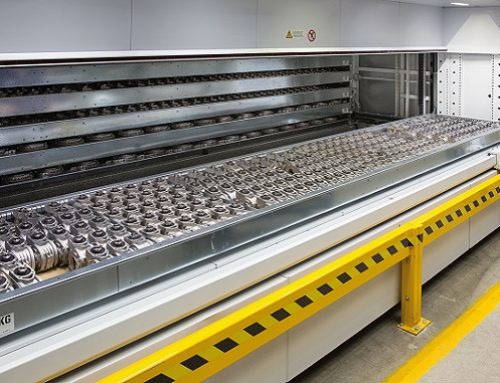
Automated storage and retrieval systems (ASRS) are innovations controlled by computers or robots that automatically store and retrieve items from specific areas in a warehouse.
This type of technology can help save space, increase picking accuracy and improve overall efficiency.
In addition, you can integrate most ASRS with different warehouse software solutions such as Warehouse Management Software (WMS) to help you further monitor and manage your warehouse operations effectively.
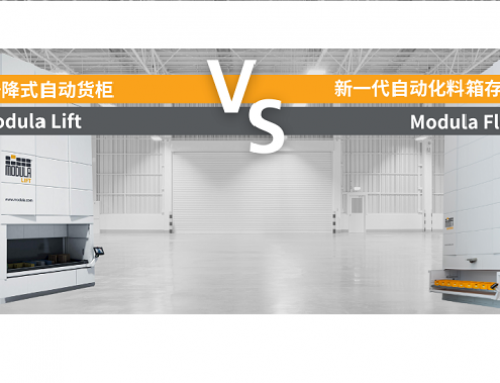
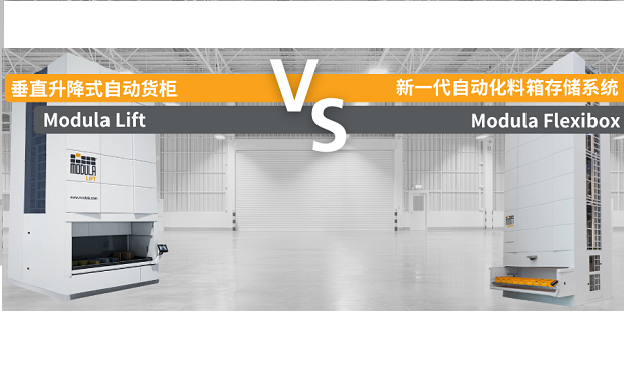
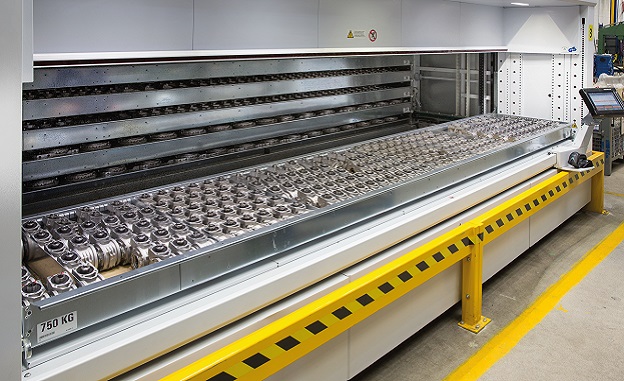
Modula’s Vertical Lift Module (VLM) is a computer-controlled robotic system that maximises warehouse space by storing inventory vertically, saving up to 90% of your floor area.
We provide three models, including Modula Lift, Modula Slim and Modula NEXT. Each model is designed to use minimal floor space while making the most of your warehouse’s height.
For warehouses with low ceilings, our Horizontal Carousel (HC) is the ideal solution.
This system features rotating bins on an oval track that automatically bring inventory to your warehouse operators. It cuts labor costs, boosts efficiency and improves inventory accuracy in both production and distribution settings.
3.Warehouse Robotics
Warehouse robotics are machines that automate tasks such as picking and packing. They can either assist human operators or make up for a shortage of manpower.
This type of technology can significantly speed up processes and reduce human error, such as mispicks.
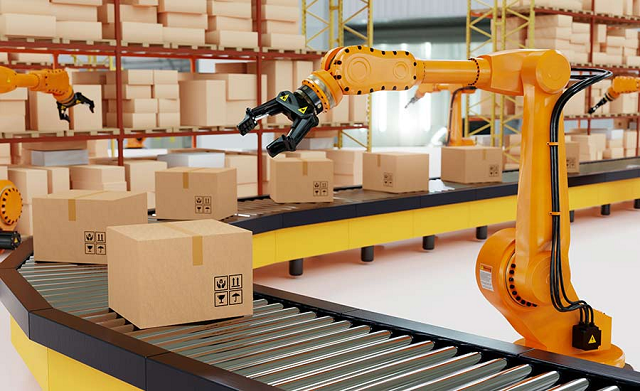
Warehouse robots automate picking and packing processes, streamlining operations and increasing efficiency
4.Radio Frequency Identification (RFID)
Radio frequency identification (RFID) are technologies that can track the movement and location of goods and equipment throughout a warehouse in real-time.
RFID can help improve inventory management and operational efficiency.
5.Internet of Things (IoT)
Internet of Things (IoT) is a collective network of connected devices that collect and exchange data, enhancing visibility across warehouse operations and enabling predictive maintenance of equipment.
In a warehouse, IoT sensors track environmental conditions, facility access and asset movement. This can help prevent theft and accidents while maintaining product integrity.
6.Conveyor Belts and Sortation Systems
Conveyor belts and sortation systems are equipment that automatically identify, process and direct items to their correct location within the warehouse.
Conveyor belts are efficient for continuous and long-distance material transport.
7.3D Bin Packing
3D bin packing is a technology that automates the process of measuring and weighing items to find the optimal box size, maximizing packaging efficiency.
In addition, 3D bin packing can create custom box sizes based on your needs, helping you reduce packaging materials.
8.Automated Document Insertion
Automated document insertion is a technology that scans each item on the conveyor belt and instantly generates the necessary paperwork, including labels with product details, such as dimensions, weight and handling instructions.
In addition, automated document insertion systems place essential documents, such as manuals and warranty certificates, into the package before sealing it for shipping.
9.Assisted Picking Tools
Assisted picking tools are devices or wearable technologies that guide warehouse employees to the correct inventory locations and ensure they pick the right items.
Assisted picking tools increase accuracy and speed up the picking process.
At Modula APAC, we offer a range of picking solutions that simplify the process by making items easier to find, speeding up picking, reducing errors, and streamlining the entire procedure for improved efficiency and accuracy.
Our picking solutions include put to light, picking cart, picking station and Modula’s mobile picking app.
10.Mobile Robots (AGVs and AMRs)
Automated guided vehicles (AGVs) are robots that follow fixed paths using wires or markers on the floor to transport goods around a warehouse.
Automated mobile robots (AMRs), also known as the successors of AGVs, are robots that navigate the facility independently using maps and sensors.
They can optimise routes, avoid obstacles (like cluttered pathways) and safely transport materials around the warehouse without human intervention.
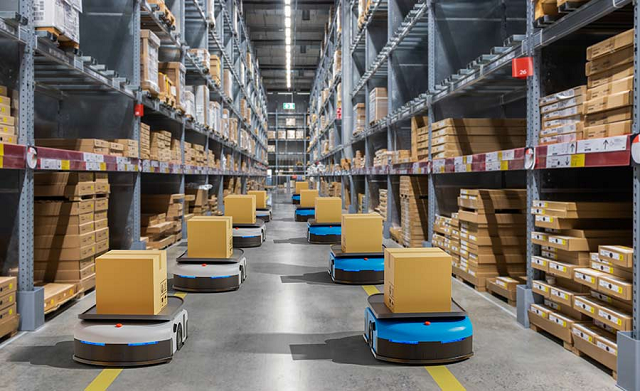
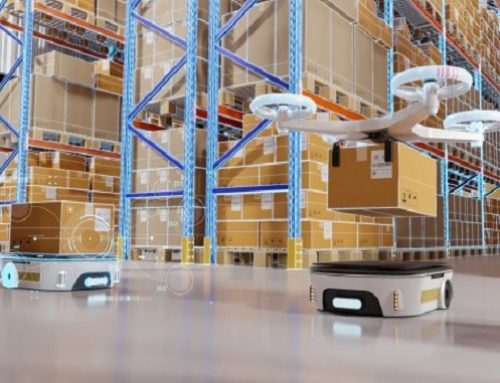
warehouse technology robots AGVs and AMRs can transport goods within the warehouse
11.Warehouse Drones
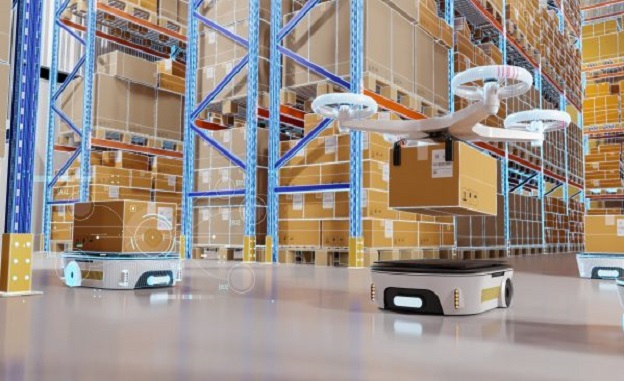
Warehouse drones, or UAV (unmanned aerial vehicles), are machines that can fly through the warehouse to check inventory levels and scan goods in hard-to-reach areas.
For example, warehouse drones can confirm if items placed on high shelves are correct. This reduces the need for warehouse employees to use manual labor and ladders.
Warehouse drones are typically found in smart warehouses.
12.Predictive Analytics
Predictive analytics is an innovation that leverages historical data and machine learning techniques to forecast future inventory needs, demand trends and potential operational bottlenecks.
Predictive analytics can help warehouse managers to make proactive decisions, such as forecasting equipment maintenance needs and scheduling staff more effectively to meet anticipated demand.
13.Machine Learning (ML)
Machine learning (ML) analyzes large sets of data to automatically learn and improve from experience without being explicitly programmed, enhancing functions such as demand forecasting and anomaly detection in warehouse operations.
14.Artificial Intelligence (AI)
Artificial intelligence (AI) employs algorithms and computational processing to mimic human decision-making and learning abilities.
AI can help optimise operations, such as routing, maintenance and complex problem solving.
15.Inventory Scanning Technology
Inventory scanning technology uses barcodes and scanners to automatically track inventory levels and locations.
This type of technology ensures accurate stock data and efficient retrieval processes.
16.Blockchain Technology
Blockchain technology in a warehouse setting reimagines inventory management, shipment tracking and transaction verification.
It uses a distributed ledger to record and validate every action in your supply chain, ensuring a secure, transparent, and unchangeable record of operations.
How to Determine Which Warehouse Technologies Should You Use
Choosing the right warehouse technologies for your operation requires evaluating key factors to ensure they meet your business needs and improve operational efficiency.
Here’s a step-by-step approach to help you decide:
1.Assess Your Current Needs and Challenges
Evaluate your current warehouse operations to identify pain points, inefficiencies and areas where errors often occur.
For example, if you notice frequent mistakes in inventory counts or delays in order processing, these can indicate that these processes would benefit from automated systems.
2.Define Your Objectives
Clearly define what you aim to achieve with new technology, such as increased accuracy, faster processing times, reduced costs or improved safety.
Set measurable goals or set specific warehouse KPIs to help you evaluate the success of implementing the technology.
3.Understand the Available Warehouse Technologies
Research the different types of warehouse technologies available. Then, determine how each technology fits within various aspects of warehouse management, such as packing orders or managing inventory.
For example, if you find managing inventory challenging, consider implementing RFID systems or ASRS to streamline operations and minimise errors.
For order packing, consider conveyor belts or robotic packing stations to speed up the process and increase accuracy.
4.Analyze the Technology’s Compatibility and Integration
Check how well the latest warehouse technologies can integrate with your existing warehouse management system (WMS) and other IT infrastructure.
Consider whether the technology will require significant changes to your current processes or if it can be easily adapted.
5.Calculate the Return on Investment (ROI)
Estimate the costs associated with implementing new technologies, including initial setup costs, training and ongoing maintenance.
Compare these costs against the expected benefits, such as labor savings, reduced error rates or increased throughput.
6.Pilot the Technology
Before fully committing to a specific warehouse technology, consider piloting the innovation in a controlled section of your operations to see its impact in real-time.
Use the pilot to fine-tune configurations, train staff and identify any unforeseen issues.
For example, if you’re testing an automated picking system, start with a small section of your inventory.
Monitor how the system affects picking times and accuracy. Then, use your findings to make the necessary adjustments before rolling the technology out across the entire warehouse.
5 Best Practices When Using Warehouse Technology
Implementing a set of guidelines when using warehouse technology allows you to optimise inventory management, reduce operational costs and significantly improve order fulfillment accuracy and speed.
1.Implement Real-Time Inventory Tracking
Equip your warehouse with RFID or barcode scanning technology to update inventory levels instantly. This practice minimises errors, speeds up order processing, and improves inventory accuracy.
2.Optimise Layout with Data Analytics
Use warehouse management software to analyze traffic patterns and storage efficiency. Rearrange your warehouse layout based on this data to reduce travel time for picking and increase overall operational efficiency.
3.Regularly Update and Maintain Systems
Schedule regular maintenance for all technological equipment and update software systems to ensure they are running on the latest versions. This reduces downtime due to equipment failures and protects against security vulnerabilities.
4.Offer Comprehensive Training for Your Employees
Provide comprehensive training for all warehouse staff on new technologies before implementation and offer ongoing training sessions to keep skills sharp. This ensures all team members are proficient and can maximise the benefits of the technology.
5.Leverage Automation for Repetitive Tasks
Introduce automation technologies such as conveyor belts, automated sorting systems, and robotic pickers for repetitive tasks. This reduces physical strain on workers and increases productivity by allowing staff to focus on more complex operations.
Wrapping Up on Warehouse Technology
As a leader in warehouse technology, Modula APAC specialises in automated warehouse solutions that maximise space, enhance picking accuracy, boost efficiency and improve worker safety.
We are dedicated to improving logistics for warehouses of all sizes and industries. Our commitment to innovation is reflected in our high-tech manufacturing standards, enabling us to provide valuable solutions to customers worldwide.
Reach out to discover how we can tailor our warehouse solutions to your needs. Our team is ready to offer customised advice and solutions for your specific requirements.